Friday, 31 March 2017

Thursday, 30 March 2017
EDITED ON 31.03.17 Q1: In what ways does your media product use, develop or challenge forms and conventions or real media product?
Conventions that we used, consisted of the following:
- Young female vulnerable victim
- Typical forest location
- Chiaroscuro lighting
- Tension building music
- Genre fitting fonts
- MacGuffin (an unused item central to the story line)
- Gender stereotypes

There is diegetic sound in this scene of birds and wind passing by which is mixed with the non-diegetic sounds of music which increases and decreases in sound balance to create more tension. The use of mise en scene and location makes the scene neat and put together- even with all the leaves on the ground, it still looks well presented. The mise en scene uses a clean costume, with light coloured jeans and pristine white shoes, which adds to the innocence and fragility of the character. The use of combining the music and the costume creates a crisp ambience which immerses the audience with mystery and curiosity as to what a pristine looking young girl is doing in a place like this. The conventions of a young female victim is used in thrillers such as The Disappearance of Alice Creed and Sin City.
 This still represents the challenging of gender stereotypes as the
antagonist's gender is not revealed- in most thriller films, the
antagonist is a male character. We chose not to disclose this element of
our film as to show that gender aside, anyone can hurt you. The
This still represents the challenging of gender stereotypes as the
antagonist's gender is not revealed- in most thriller films, the
antagonist is a male character. We chose not to disclose this element of
our film as to show that gender aside, anyone can hurt you. Thechoice not to have a gender for the antagonist meant that we could play with conventions and stereotypes of the genre and challenge them for a more diverse outcome as opposed to the typical thriller film. The composition of this shot shows both characters to the side, disregarding and power one might hold. Notwithstanding this information, the antagonist takes up much more of the screen than the protagonist which identifies the antagonist with the most amount of power in this situation. The mise en scene places the antagonist in dark clothing which adds enunciates the mystery of the character. The editing of this scene is quite slow which builds the tension and foreshadows the climax of the film. The use of a pan puts the antagonist in power as we follow their eye-line and adds to the audience's aesthetic interest as the camera is not still. As we follow the camera view, the audience are immersed as their eye-line is changing as well as the antagonist's eye-line. The use of hiding the antagonist, links to The Third Man during the sewer scene. This challenges the conventions of male dominance in thrillers and gender stereotypes.
 The use of placing the protagonist on the side of the shot and the antagonist in the middle of the shot, is to emphasise
the villainous aspects of their character. The antagonist looks to the side, and shows a clear sign of worry on her face, which uses the convention of a young and fragile female. The composition shows that the antagonist- although a mystery- has more power than the protagonist. The background has a leading line to the protagonists eyes which implies that we must look where she looks as to follow the story. This convention also emphasises the antagonist as they are in the middle of the geometric shaping of the trees in a triangle. The camera in this shot is still, which builds towards a climax as nothing is moving and strengthens the danger of the scene. Within the diegetic sound of this scene, we hear the protagonist sighing which adds to the tension of the scene. The editing here is slow and so adds tension, like the sigh, emphasising the impending danger and doom. This links to other films such as Sin City due to the 'hidden killer' concept where the man stabs the woman from behind her back so she doesn't know him. This reinforces the typical convention of a young vulnerable female.
 In this shot, we see the protagonist being dragged away by the antagonist. The feet of the protagonist are in the centre of the screen which draw our eye-line to the event happening on screen. This shot pushes the antagonist further to the side of the screen than the protagonist which could represent a power change, or foreshadowing of the future scenes. The composition of this shot switches the power completely. As for mise en scene, we see the entire costume for the antagonist which is all black - a typical convention for a 'villain' character. At this point, the non-diegetic is becoming much more tense and therefore creates a sense of danger, reinforcing the thriller conventions of dramatic music. The use of viewing this scene from far away contrasts to directors such
as The Coen Brothers (The Big Lebowski) who always direct close up when
an intimate scene is happening between the antagonist and protagonist. The use of showing this from far away puts emphasis on the audience as it is almost as if they are the ones watching behind a tree- immersing them fully in the story and plot. This makes them a part of the film completely
In this shot, we see the protagonist being dragged away by the antagonist. The feet of the protagonist are in the centre of the screen which draw our eye-line to the event happening on screen. This shot pushes the antagonist further to the side of the screen than the protagonist which could represent a power change, or foreshadowing of the future scenes. The composition of this shot switches the power completely. As for mise en scene, we see the entire costume for the antagonist which is all black - a typical convention for a 'villain' character. At this point, the non-diegetic is becoming much more tense and therefore creates a sense of danger, reinforcing the thriller conventions of dramatic music. The use of viewing this scene from far away contrasts to directors such
as The Coen Brothers (The Big Lebowski) who always direct close up when
an intimate scene is happening between the antagonist and protagonist. The use of showing this from far away puts emphasis on the audience as it is almost as if they are the ones watching behind a tree- immersing them fully in the story and plot. This makes them a part of the film completely and includes them as a 'part of the film' if you will.

 In this shot, we have an extreme close up of the protagonists face, showing a bruise on her cheek. This uses the conventions of female vulnerability and age fragility. The composition of the shot puts the protagonist in the centre of the shot which links to the climax and how we, as an audience, can sense it coming along. At this point in the film, the only sound is the non-diegetic sound due to the enclosed location, emphasising the claustrophobia of the place - creating a sense of distress and danger. The editing from this point onward has a quicker pace, which adds to the tension building and leading to the impending climax. The mise en scene of this shows the, once pristine and neat girl, as being battered and bruised- adding to the grittiness of the shot. This shot links to The Disappearance of Alice Creed, as we see Alice's bruises and battle scars too- hence using conventions of vulnerable girls in thriller films. The darkness of this scene contrasts previous shots in the forest where it was significantly lighter, emphasising the change from an alright situation of a girl in the woods, to a bad situation of a girl locked up.
  The use of this location adds to the typical location convention of somewhere dark and gritty within a thriller film location choice. Both hands are holding on to bars of a cage which are also in the centre of the shot, emphasising the importance of this character and how power has changed. The composition of this shot places the protagonist at the centre, which puts power onto her even though she is behind bars. The mise en scene is covered, and we only see her dark looking top (light jeans and white shoes not showing) which adds to the building up of the climax and impending danger which is soon. The edit at this point in time has quickened pace by a lot, and so further expressing the climax and danger that encases all her surroundings. The location gives the ambience a grittiness to it, and a high sense of fear and fragility that the protagonist is feeling. The cage positions the camera outside, which disconnects the audience from her, and connects them with the antagonist -seeing into the cage.
This shot uses chiaroscuro lighting which is influenced by neo-noir films such as The Third Man. This makes the film seem more obscure as there has been a lot of light in the forest, to a really dark room, to almost pitch black (then to the brightness of the last shot). We decided to use this shot because it enhances the power of the antagonist as this is the shot that makes the protagonist back away from the cage door and so reinforces the amount of power that they have left even after the composition power shift. The sound in this shot is almost at its climax, which emhasises the end of the scene, and furthers the illusion of danger in the scene. The editing here is at the same state of quickness as the last shot, which shows stability of the danger occurring. The audience switches perspective once again, as we are placed, not with the antagonist, but also not with the protagonist (or we would be behind bars), and so are placed with a third party, which once again makes them unattached them from the scene.
 In this shot, light is used against the protagonist as a means to intimidate and petrify. In this shot, a white noise sound is used which adds emphasis on the genre for conventional music which captures the thriller genre onto the screen. The composition of this shot places the protagonist in the centre of the screen, which gives her power, but does not add to her non-existent level of control. The sound at this point is the climax of the non-diegetic soundtrack which adds to the danger and ending. There is also white noise at this point which increases the sense of risk. The editing here is fast, making the light bright and forceful- it also gives the scene jeopardy and insecurity. This links to other films that have a cliff hanger in their opening before the opening title. It uses the convention of really tense music to intimidate characters and the audience together.
 Wednesday, 29 March 2017
Wednesday, 22 March 2017
Q2: How does your media product represent particular social groups?
 |
| Figure 1 |
This convention links to other films such as The Disappearance of Alive Creed as this film also has a young female who gets taken. and so reinforcing that it is a highly used convention of thriller film.
 |
| Figure 2 |
Linking this to age representation makes it even more of a well used convention as younger characters are seen as more fragile and unable to look after themselves.
 |
| Figure 3 |
 |
| Figure 4 |
Young females are the targets of most thriller films and so get hurt along the way. In The Disappearance of Alice Creed, this is a common convention as she is constantly put in danger and is hurt. This convention is also shown within our thriller so as to make it like a real film that would be produced with the proper conventions. Seen in figure 4.
 |
| Figure 5 |
Conventionally, though, the antagonist would usually be a man. For example Essex Boys, The Disappearance of Alice Creed, Layer Cake, Sin City, and The Third Man - this is five out of the seven films we have studied, showing that 71% of the films studied use the stereotypical convention of a male villain.
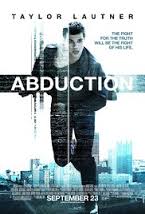 Our film taps into the commonly used trait of the teen fear of abduction. This can be seen in films such as Abduction and The Disappearance of Alice Creed. The use of taking on the aspect of teen fear, exaggerates the realism of our production, and reinforcing the facts that it can happen anywhere, to anyone. This is a common fear to teens due to their vulnerability and lack of know how as to taking care of themselves in dark situations.
Monday, 13 March 2017
Sunday, 12 March 2017
EDITED 31.03.17 Q6: What have you learnt about technologies from the process of constructing this product?
Pre-Production:
 Within pre-production and the planning area or work, we created blogs which we would put all of our work onto. We use these blogs because they are interactive as well as being flexible with usage and editing. They allow for multimedia additions such as power-points, YouTube videos, and pictures.
When researching, we watched other films and YouTube videos to help us grasp the main concept of what a thriller encapsulates. This was helpful as we were able to see what conventions there were, and how to use them- such as sounds and editing skills. As we were researching other thriller films, we used DropBox as a public share point where our teacher would upload the stills from the clips we watched so that we could easily access them and analyse them. Similarly, we used Google Drive as we were all able to access the document and edit it at the same time, making collaborative work much easier. Sites such as DaFont and FreeSound were used as they allowed us to see fonts that could be used and sounds that might work within the style of film we were making. These creatively empowering sites were copyright free for the most part, and so we were able to use any of the clips or fonts without breaking the law.
 During production, we used HD cameras which had SD cards for compact memory, as well as clear settings for zoom, and focus. There was a screed to watch back the footage and they were of high quality, making our filming run smoothly an efficiently. The camera settings gave us a variety of ways in which we could have shot our film which empowered us as amateur protectionists because we had a firm choice and had many options of which we could choose from to make our film as quirky or as neutral as we wanted it to be.
For the camera, we used a personal camera that two of the crew were capable of using well- with plenty of experience. Due to this being our own camera, we did not have to worry about times to hand it back in, and we had plenty of memory due to spare memory cards we owned that were compatible with both the camera and the program we used to edit on.
 During post-production, we used a non-linear editing software called Premier Pro, which allowed us to edit in sections as well as in any order we wanted to. This software allowed us to add transitions, such as fade to black, and text on screen. It allowed us to refine and tweak the style as we went along too, as well as going back and changing things afterwards. This software allowed for us to change sound and colour of the footage which was also creatively empowering and gave a lot of control over the outcome.
Also during this stage, we used FreeSound to get background music, sound clips of a ringing phone- creating the right atmosphere to fit the genre conventions of a thriller. Programs such as these are creatively empowering as they enhance the ability for originality in a piece of work. Sites and programs such as Premier Pro and FreeSound allows students like us to create an original piece based purely on imagination and on the genre chosen as FreeSound ha every sound you could need to make a film/short film.
Production:
 During production, we used HD cameras which had SD cards for compact memory, as well as clear settings for zoom, and focus. There was a screed to watch back the footage and they were of high quality, making our filming run smoothly an efficiently. The camera settings gave us a variety of ways in which we could have shot our film which empowered us as amateur protectionists because we had a firm choice and had many options of which we could choose from to make our film as quirky or as neutral as we wanted it to be.
For the camera, we used a personal camera that two of the crew were capable of using well- with plenty of experience. Due to this being our own camera, we did not have to worry about times to hand it back in, and we had plenty of memory due to spare memory cards we owned that were compatible with both the camera and the program we used to edit on.
Post-Production:
 During post-production, we used a non-linear editing software called Premier Pro, which allowed us to edit in sections as well as in any order we wanted to. This software allowed us to add transitions, such as fade to black, and text on screen. It allowed us to refine and tweak the style as we went along too, as well as going back and changing things afterwards. This software allowed for us to change sound and colour of the footage which was also creatively empowering and gave a lot of control over the outcome.
Also during this stage, we used FreeSound to get background music, sound clips of a ringing phone- creating the right atmosphere to fit the genre conventions of a thriller. Programs such as these are creatively empowering as they enhance the ability for originality in a piece of work. Sites and programs such as Premier Pro and FreeSound allows students like us to create an original piece based purely on imagination and on the genre chosen as FreeSound ha every sound you could need to make a film/short film.
Friday, 10 March 2017
Thursday, 9 March 2017
Tuesday, 28 February 2017
How will you use sound in your opening?
Within our opening, we are using the diegetic sounds of: sighing, footsteps, birds, natural sounds, and a phone sound (we tried filming it but decided it's better to add one in after)
We are using the non-diegetic sounds of: something non-copy-written that will create a tension building atmosphere, to cover parts of the clip where sound is jumpy and/or doesn't match up due to cuts within the clips.
During production, we are using the natural recording sounds, and post production, we are putting in the sound of a voice mail as well as an eerie soundtrack to build tension.
The effect we are trying to get is an eerie, mysterious sound which builds tension.
We are using the non-diegetic sounds of: something non-copy-written that will create a tension building atmosphere, to cover parts of the clip where sound is jumpy and/or doesn't match up due to cuts within the clips.
During production, we are using the natural recording sounds, and post production, we are putting in the sound of a voice mail as well as an eerie soundtrack to build tension.
The effect we are trying to get is an eerie, mysterious sound which builds tension.
Monday, 27 February 2017
Marked rough cut
The strengths of this edit are that there is continuity where there should be and therefore the flow of the clip works well.
The weaknesses are that the sound is a little jumpy but I will fix this with a soundtrack piece.
For the final cut, we need to add the last part of our film onto the edit and also add in the sound effects.
Thursday, 16 February 2017
Soundtrack on other films
Soundtrack is used within the opening of films to great the genre, as a film could be scary, but then use a childish piece of music on top which would change the genre to something completely different, which is why getting the music right is very important.
For example, the film Se7en, uses city sounds as well as other dietetic sounds such as putting cups in a sink, footsteps, picking up keys, light switches, speaking and rain. The speaking emphasises dominance and tension as there is interruption. Then a metronome is used which emphasises the order and precision, which also covers the harsh city sounds. There is a crack of thunder which leads to the screen going black and the opening credits starting. In its opening credits, uses glitchy sounds such as a loud boom, scratching, creaking, screeching and breaking glass which all then come together to create a beat after showing them separately in a cycle. The music gets louder as is finishes, emphasising the inevitable end. The song used and edited is 'Closer' by 'Nine Inch Nails' which is a heavy, hardcore rock song. This links with the genre due to the grungy feel.
The film Essex Boys in the opening credits and scene uses silence for the beginning whilst true facts are placed upon the screen about the actions within the film creating suspense and tension. This goes on for the first 35 seconds of the film. Then, the silence is replaced with screeching and humming which stops and starts creating more tension, sounding almost like chalk on a chalkboard. This is replaced with clanging metal. After this, the sound goes to the diegetic sounds of a creaking metal door, light switches, foot steps and a car door opening and closing. Then, a voice over is present, using typical British male voice. Non-diegetic music is placed over the top as we see the car driving, which uses rocky music with an almost electronic edge to it. There is shouting in the background with the sound of punches and kicks, which are supposed to be diegetic but were added in afterwards.
The film Layer Cake mainly uses a voice over of a very British voice interrupter by a surprising large crashing sound. The voice over continues. There is a piece of classical appearing music, which over time is sounded out by screaming and shouting, but then the music turns almost electronic sounding wth beeping sounds throughout. The voice over uses a match-cut as the voice is in sync with what someone says on camera. These completely overtake the scene as we focus on the voice slightly more than the image as the voice is telling a backstory.
Monday, 6 February 2017
Wednesday, 1 February 2017


Tuesday, 31 January 2017
Monday, 30 January 2017
Friday, 20 January 2017
Possible Locations
Woodland Area: Scene One
Mulbarton- Near Jai's house
Advantages:
UEA woods
Advantages:
Costessey - ~Near my house
Advantages:
Small Dark Room: Scene Two
Back of the Tech Block
Advantages:

Mulbarton- Near Jai's house
Advantages:
- Away from the public so there will not be any background noise
- Nice lighting
- Far away
UEA woods
Advantages:
- Safe
- Easy to get to
- Nice lighting
- May be interrupted by the public
- Need permission to film
- Background noise may be a problem
- Far away
Costessey - ~Near my house
Advantages:
- Away from the public
- Quiet- little background noise
- Grungy
- Safe
- Far away
Small Dark Room: Scene Two
Back of the Tech Block
Advantages:
- Easily accessible
- Works aesthetically
- Possible noises from students
- Limited time to film
- Strict permission needed

Saturday, 14 January 2017
Plot and Influences
Plot
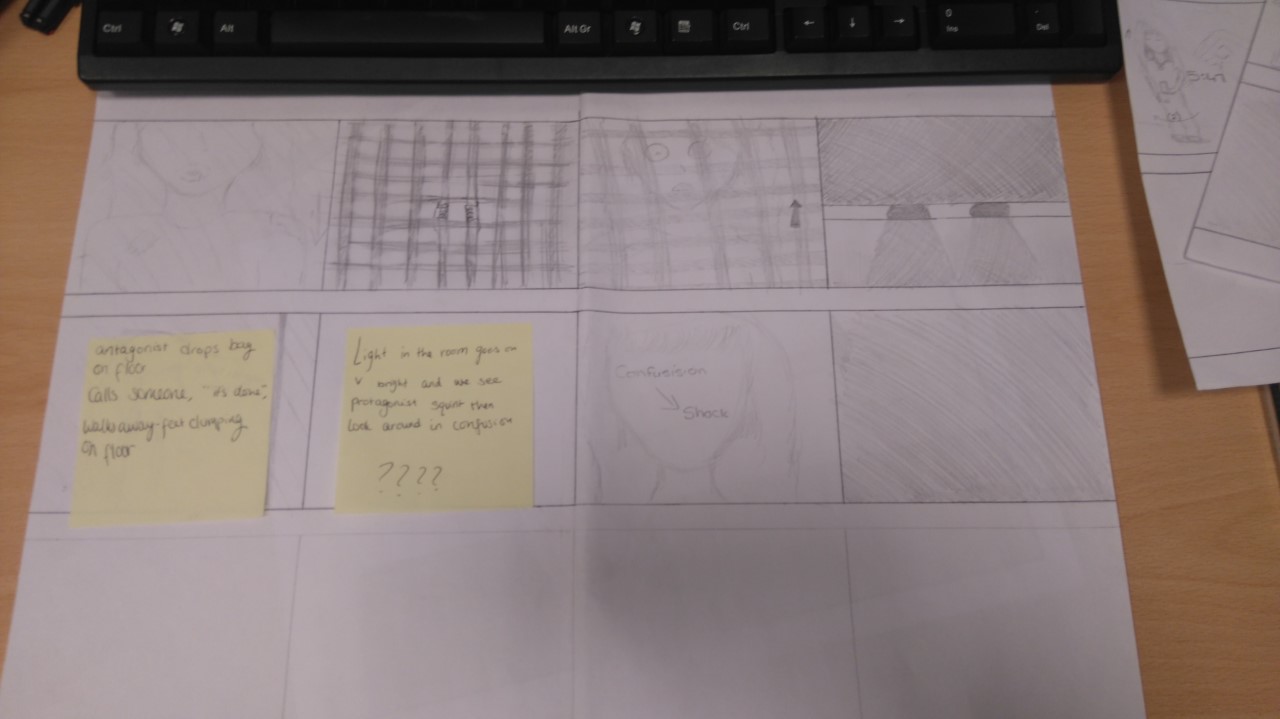
The scene starts off with several landscape shots, with the sounds of nature and a phone calling someone. As the phone goes to voicemail, we see the first shot of the protagonist. She sighs and leans against the tree that has been marked, playing with the phone in her hands. A shot from the perspective of the antagonist is seen, watching the antagonist from a distance, behind a tree. Back to the protagonist, she begins to pace in irritation, checking her watch in the process, indicating the person she was to be meeting is late. The first glimpse of the antagonist is seen with an over the shoulder shot, with a focus switch from the antagonist to the protagonist. Another phone rings from the protagonist, which she pulls out to reveal is from her mother. It is quickly declined and returned to her pocket, the original phone still present. Back to the antagonist, we see them inch closer towards the protagonist, with a pause at the end to see them soak an old rag in what appears to be chloroform, shown in an extreme close up. This is followed by a close up of the protagonist’s face and shoulders- she moves to the left to reveal the antagonist has now moved to behind her, still slightly at distance, though the next shot is once from the perspective of the antagonist as they move up closer behind the protagonist. Tension is maximised with a close up of the protagonist, still, glancing around slightly (expressing paranoia) and finally looking into the camera, moments before a hand holding the rag is wrapped around her mouth and nose. A struggle between the two ensues, using a hand-held camera for a panicked effect. Within this, the locket is pulled off. This continues until the shot changes to the same as behind the tree from where the antagonist once was, which shows the last of the struggle before the protagonist passes out. She falls back against the antagonist and they begin to drag her. Connecting the shots, we then see the legs of the protagonist being dragged out of shot, leaving only the locket on the ground, dirtied.Proceeding a cut to black, there is a master shot of the new location, a basement of similar confiding room. The protagonist is seen in one corner of the shot, hunched over. There is then a close up of the protagonist regaining consciousness, panicking, and rising, followed by a shot of her hands which have grabbed around the bars that are confining her, Back to the face, we hear the sound of heavy footsteps and we see the protagonist look down and retreat backwards. The camera follows her eye line to reveal a crack beneath a door, showing the silhouette of a person’s feet. A switch is then made to the other side of the door where you see the protagonists' feet, and a bag being dropped on the floor (the same one as is seen in the first scene). They call someone, and 'It's done' or something similar is heard, and then a shot of them walking away follows. with the sounds of their boots. Back to the protagonist, we see a shot of her which is followed by the darkness being replaced with an extremely bright, sterile light, Finally, an extreme close up of the protagonist is seen, showing her confusion, then her panic. The shot ends with an abrupt cut to black, like a switch.
Influences
One of our main influences for our psychological thriller came from ‘The Disappearance of Alice Creed’, where the idea of some form of kidnapping originated from. From there, our choice of locations were inspired by the projects of previous students both from in school and other schools, due to the atmosphere that was provided from more secluded locations such as forests and grungy rooms. A minor influence that we have used to make the filming smoother is from the BBC version of 'Sherlock', as although it is not a thriller, the idea of on-screen texting as a way of showing calls and messages could be used a more interesting idea than using the cliche of showing the phone. The idea for the locket came from the film 'Se7en', as within that film the wallpaper cutting is suggestive of the protagonist's past, and we felt a similar concept would be effective in our piece. Films such as 'Tower Block' and 'Saw' were the influence for our second scene, as both films involved a character trying to escape a room after been trapped, which we felt would fit the tone of what we were trying to create. Lastly, the idea for having scenes viewed through the antagonist's perspective came from the film, 'Ratter' as we felt it would be effective in showing a different side of things and introducing more shot variety.
Wednesday, 11 January 2017
Mood Board
For our thriller, we have adopted a sub-genre for a psychological thriller. This means we will be including shots where we look at the mentality of the characters and they stability, or lack thereof. This (sub)genre involves elements of mystery, drama and slight horror themes.
For our characters, we have two- the protagonist (Neave) and the antagonist (me). We are including things such as a sentimental item which the audience do not find out about (the locket), possible scars on the antagonist to emphasise the danger of them.
Font wise, we are planning on putting the text on screen (instead of showing the phone), and so need an easy to read font which also goes with the genre.
We have two locations- the forest, and the small confined room. We have chosen a forest because it adds to the fear and paranoia aspects of being watched due to the many places to hide. We chose the small confined room as it gives a claustrophobic feel to the shots, and adds fear.
We will be using Extreme Close Ups to emphasise emotions, tension and confusion - for things such as the locket. Shadows may be used to emphasise distortion and mystery.
For editing ideas, we have gone with possibly using a handwritten fort or a chaotic messy font to add tension and disorientation. Also, possibly using ghosting to emphasise distortion and paranoia.
For our characters, we have two- the protagonist (Neave) and the antagonist (me). We are including things such as a sentimental item which the audience do not find out about (the locket), possible scars on the antagonist to emphasise the danger of them.
Font wise, we are planning on putting the text on screen (instead of showing the phone), and so need an easy to read font which also goes with the genre.
We have two locations- the forest, and the small confined room. We have chosen a forest because it adds to the fear and paranoia aspects of being watched due to the many places to hide. We chose the small confined room as it gives a claustrophobic feel to the shots, and adds fear.
We will be using Extreme Close Ups to emphasise emotions, tension and confusion - for things such as the locket. Shadows may be used to emphasise distortion and mystery.
For editing ideas, we have gone with possibly using a handwritten fort or a chaotic messy font to add tension and disorientation. Also, possibly using ghosting to emphasise distortion and paranoia.
What do directors seek to establish in the opening of thrillers?
What do directors seek to establish in the opening of thrillers?
Within the few thriller film openings we have viewed so far in the course (Double Indemnity; The Third Man; Sin City; Se7en; Essex Boys; Layer Cake; and The Disappearance Of Alice Creed), we have placed them on a chart to see how much they represent the following; genre; character; themes; location; tone/mood; and plot.

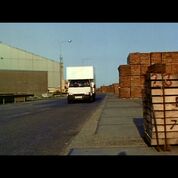
Thriller films tend to have the casual location of either a city or an excluded place. For example, the film Essex Boys uses a driving scene to establish the location, but not overly, the scene is in a London town, but it is quite subtle, due to simply being a road location. The shot focuses on a van driving up the street. Other thriller films such as Sin City use a city location on top of a balcony. These contrast each other greatly due to the difference within their location choices.
Essex Boys uses a simple location, with not much going on and so establishes the calmness of the area. Sin City, however, uses a black and white (with the red of the character) which exaggerates the hectic city below.
 Essex Boys uses vanishing points a lot within the opening. For example, this shot uses an off centre vanishing point which has connotations of being unstable. the car is seen to be driving into the darkness which symbolises that they're heading towards the bleak abyss ahead of them. The tunnel is off centre too which only emphasises further the lack of stability and confidence. Which sets both the tone and location as something of a bleak confusion.
 On the other hand, films such as The Disappearance of Alice Creed steer away from establishing location, and focuses on the tone and the mood. For example, this image emphasises the tone of mystery as the items lines perfectly up create a wonder via the audience as they want to know what is going to happen and what is going on, giving connotations of a dark mood. As far as location goes, however, the furthest we see the two men within the film opening go is into a van and then a shop to buy supplies to make their den.
 The use of preserving the location is also present within the opening of Layer Cake as they only film one part of location outside of the drug den and the posh building were he meets his boss. This location changes the mood of the opening drastically as at the very beginning, we see a drug base, whereas here, there is a very large posh building that looks nothing like a place where drug manufacturers would go. This connotes the mood as being bipolar due to the sudden change in scenery and lack of location continuity. This shot also changes how we, as an audience, perceive the film as the plot is then - at this point - shattered in out minds as we have no idea what is going to happen next.
Subscribe to:
Posts (Atom)